

“Hurrah! Finally! Phew!”
These words aptly describe the arrival of 2021 since 2020 was exhausting. In fact, “exhausting” is the first word readers of The Washington Post chose to summarize the past year. “Lost,” “chaotic,” “relentless” and “surreal” were also mentioned. Yet “stunning,” “breathtaking,” “extraordinary” and “remarkable” failed to rank as high even though these words are commonly used by the media to describe the Trump era.
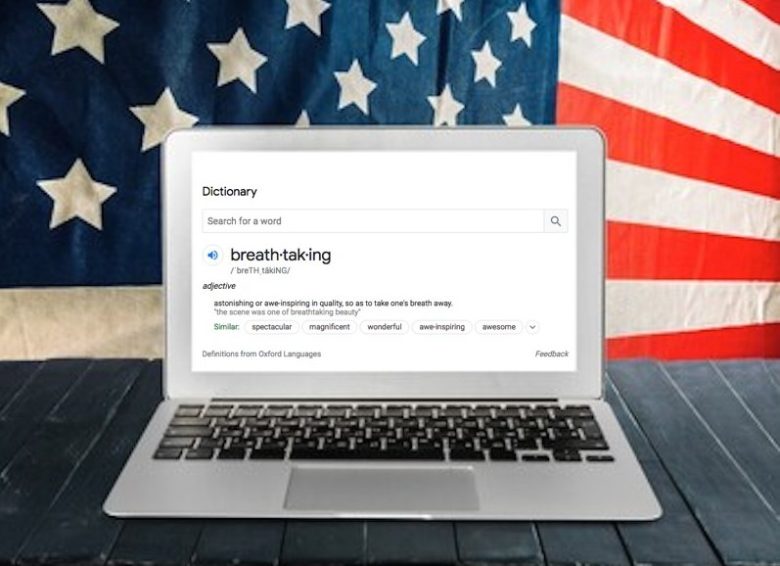
While it’s true that Trump left most Americans stunned (as in negatively shocked), the word stunning has a positive connotation. According to the Oxford English Dictionary, “stunning” means “extremely attractive or impressive” as in “You look absolutely stunning!” and “His performance was simply stunning.”
Technically, Trump’s “performance was simply stunning” per the Merriam-Webster Dictionary, which primarily defines the word as “causing astonishment or disbelief.” However, its secondary meaning is “strikingly impressive, especially in beauty or excellence.” Like the words “remarkable” and “extraordinary,” which have also been used by the press to describe Trump’s antics, “stunning” conveys an air of unintentional praise.
When Lisa Lerer of The New York Times reported that Trump lied about the vote count, smeared his opponents and attempted to undermine the integrity of the country’s electoral system, the story was titled, “Trump’s Stunning News Conference.” But without context, one could glean the headline and wrongfully conclude the event was “strikingly impressive” — in a good way.

After Trump initially said he won the 2020 presidential election, filmmaker and activist Michael Moore described the acceptance speech as “stunning, unhinged, breathtaking.” “Unhinged,” maybe. But “stunning” and “breathtaking?” Let’s reserve those adjectives to recount how “breathtaking” Audrey Hepburn looked in a “stunning” gown by Givenchy in “Funny Face.” Better yet, re-watch the 85th episode of “Seinfeld.” That’s the one where Elaine is flattered to be called “breathtaking” until she learns the same word is used to describe an ugly baby.
There’s already conflicting news stories without having to add adjectives that carry opposite implications. Whenever Americans hear the words “breathtaking,” “remarkable,” “stunning” and “extraordinary,” they should exchange them for “jaw-dropping,” “jarring,” “jolting” and “abnormal” — especially when reporters are too reticent to do so.
At the risk of appearing bias, the mainstream media has been overly cautious with its vocabulary. Since Trump took office in 2016, he’s been accused of citing 25,000 misleading statements. Yet it wasn’t until August of 2018 that The Post used the word “lie” to describe what is typically and timidly referred to as a “mistruth.” In general, the press has shied away from the word “lie” because Trump may or may not believe his alternative facts.
Similar to the popular phrase “Russian meddling” which minimized adversarial attacks on the U.S., the word “shenanigans” is now being used. Russian hacking should shake every citizen and trigger the United States Department of Defense. Yet when such acts are characterized as “meddling” and “shenanigans,” they only seem to warrant a slap on the wrist from the Girl Scouts of America.
If the pen is mightier than the sword, writers must remain sharp by wielding the right words. As CBS contributor and former Arizona Senator Jeff Flake noted, “The free press is the guardian of democracy.”